This cookbook exceeds expectations; every part of the design is executed beautifully.
A community favorite, What’s Cooking Good Looking is a victorious example of a self-published food memoir.
- Robin Wheelright, Owner/Operator, Vivienne Culinary Books
FOR RETAILERS
To order wholesale directly from What’s Cooking Good Looking LLC, please use the order link below.
What’s Cooking Good Looking is also distributed by Itasca Books Distribution & Fulfillment, which can be found here.
What’s Cooking Good Looking is available on bookshop.org and for retailers on Ingram.



RETAIL FGR (Frequently Given Responses)
MSRP is too high to compete with hardcover-bound, photographed cookbooks by nationally recognized authors.
Across the board, cookbooks and their value are underpriced. Generally speaking, cookbooks are the same price they were in the 1990s. As a reference point, $5 in 1990 is worth approximately $12.40 today, due to an average inflation rate of about 2.55% annually over the past 36 years - prices are roughly 2.48 times higher now than they were in the 1990s. Given these facts, a cookbook that was $25 over 30 years ago should be $62 today, a hard number to swallow, but one we should take down with a spoonful of sugar, if necessary.
Additionally, many (…like, all) full-color, high-quality, hardcover-bound and glossy cookbooks are produced overseas, particularly in Asia or Eastern Europe. There are limited, if any, printing plants in the United States that can produce large runs of high-quality, color-heavy cookbooks. Larger, more complex projects often demand overseas printing for lower per-unit costs, especially for print runs of 1,000 or more, allowing books to be underpriced and undervalued.
I am doing my small part to help shift this norm.
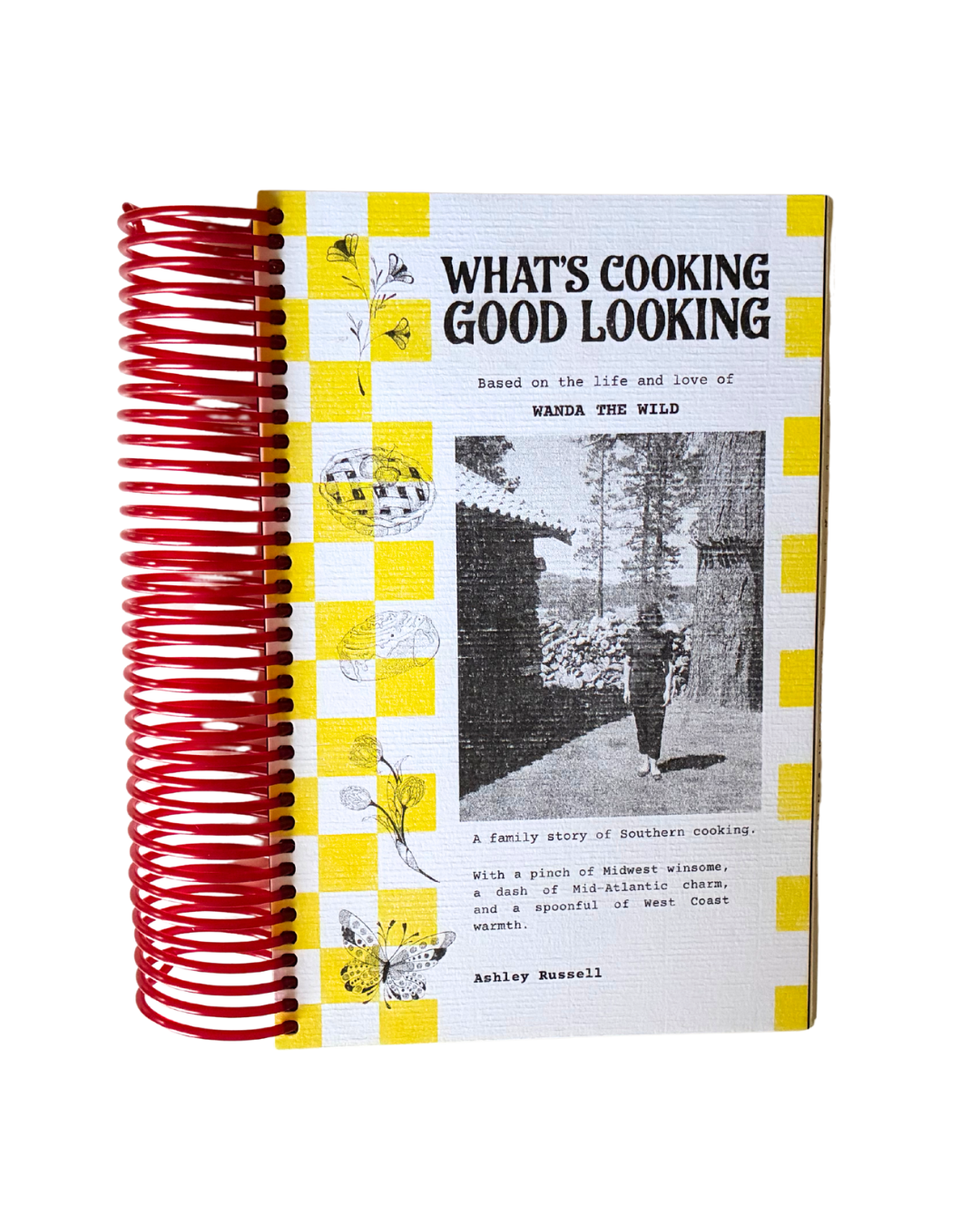
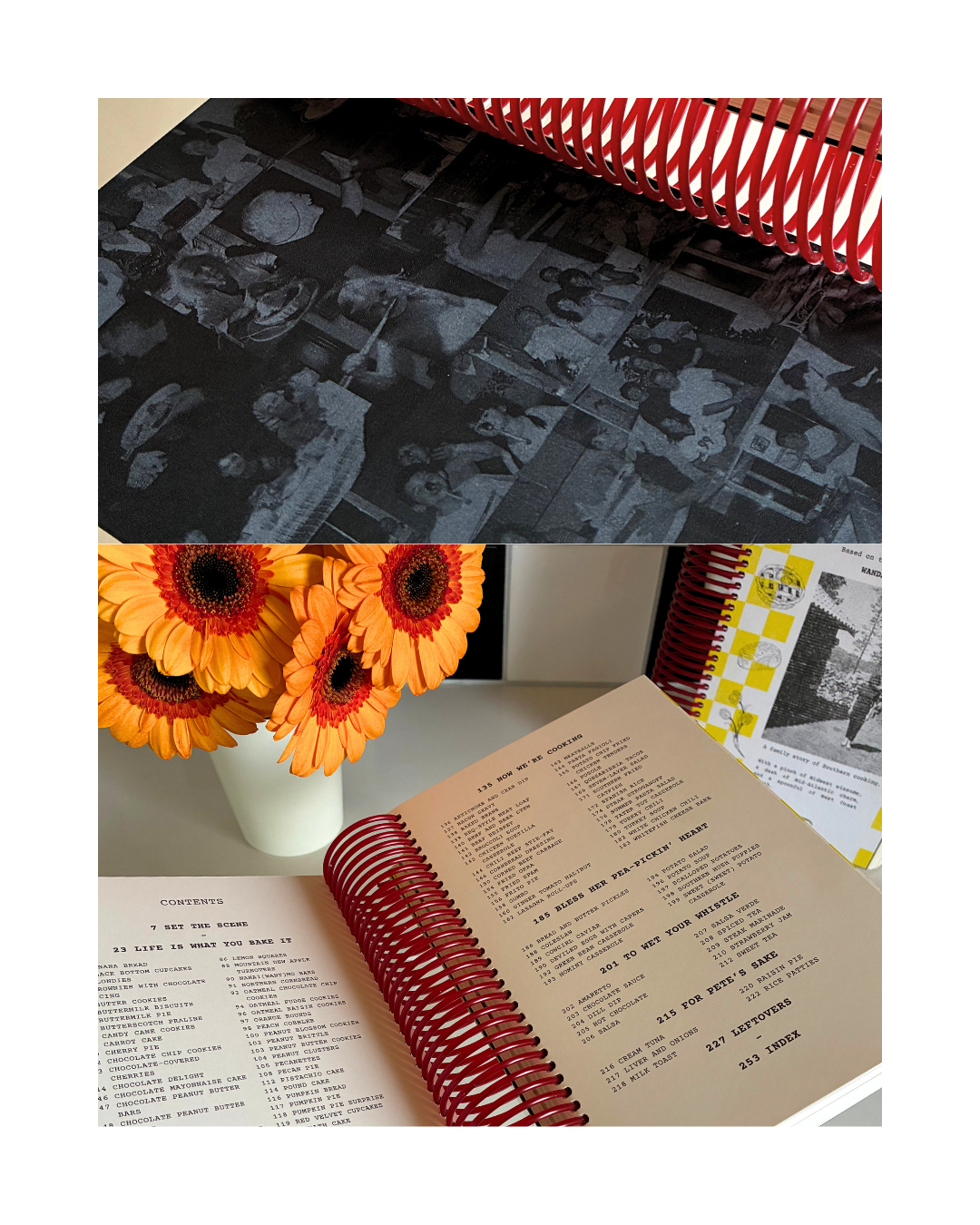
WCGL is a full 4-color book printed in small batches on 80# cover paper with color food photos, family photos, memorabilia, and illustrations - none that have seen the likes of any cookbook before! The high-quality paperback and cardstock pages of the book are both a salute to vintage cookbooks and to allow the reader, the kitchen connoisseur, to use the book just like my Nana's recipe cards were used - loved, written in, and stained with vanilla extract, baking cocoa, and sugar.
The cookbook is manufactured in a family-owned print shop in Portland, Oregon, that pays above the minimum wage to its employees. This domestic printing choice, paired with the risograph cover design, small press packaging, and heftiness of the book (she thicc), makes WCGL well worth the MSRP listed and a strong competitor to hardcover-bound, photographed cookbooks from nationally recognized authors.
As American consumers, we are conditioned to unbelievably low prices and free overnight shipping - a cultural shift is necessary to pay creators and artists what they are worth. I do not believe in producing fast-fashion cookbooks. I believe in hiring local artists and craftsmen as well as paying what it’s worth to equitably make a book, increasing the overall value of the book. I believe a cookbook is worth the price of a workweek of lattes, and my readership does, too.
Your book won't sell next to professionally published books from major publishers.
This edible memoir is a tribute to vintage cookbooks. It presents baking and cooking in a new way - a revival of the old way with a twist of lemon, if you will. It appeals to both lovers of current cookbooks and appeals to a whole new cookbook collector - one that is possibly new to cooking, inspired by nostalgia, and a lover of handmade, zine-quality, whimsical design, that is the bright star in this ever-gloomy age of AI. It appeals to lovers of vintage, small-batch printing, and limited editions. It may just inspire the decade-long cookbook collector to see recipes presented in a way that is different than the way the 5 major publishing houses present recipes.
“We can do it”. - a revered representation of female empowerment.
There is a movement in self-published books outside of print-on-demand services for authors and creators who want to produce the books that they feel are missing from the world. Cookbook lovers can’t wait to support professionally created (edited, recipe-tested, competitively designed) self-published works that break down the walls of traditional publishing. I receive nothing but praise from my 1:1 customer base and store owners who carry WCGL. I love continuing this symbiotic relationship nationwide.
Spiral-bound books can’t be shelved spine out or stacked; they get lost or can be damaged.
How many times have you heard someone say that they hate breaking the spine of their cookbook, but it is necessary to use it in the kitchen? WCGL’s spiral-binding makes it practical in the kitchen AND makes it stand out on the shelves. It doesn’t look like any other cookbook, new or old; it is the only cookbook with a 1.5-inch bright red spiral binding, allowing it to shine, whether front or spine facing. While thin spiral-bound books may be lost or damaged, the heftiness of this spiral ensures it will always be found and kept in one piece. It stacks beautifully with other cookbooks. Customers flock to the red spiral binding (I’ve experienced this firsthand), immediately in love with its design and practicality. It is unlike any book most shops have carried before - which is awesome!
You are not a local author, so the book will not be purchased without local support.
One of the (many) magical aspects of WCGL is that it features recipes from all over the United States. Bob and Wanda lived in and raised their family in Texas, Southern California, Washington, Florida, Pennsylvania, New York, Nebraska, and Hawaii (to name a few). The recipes in this book are a celebration of all of the places the Sell family has lived since the 1930s, and it shows! Its ever-popular nostalgia speaks to persons and families, from all parts of the nation and beyond. C’mon, let’s share a bite!